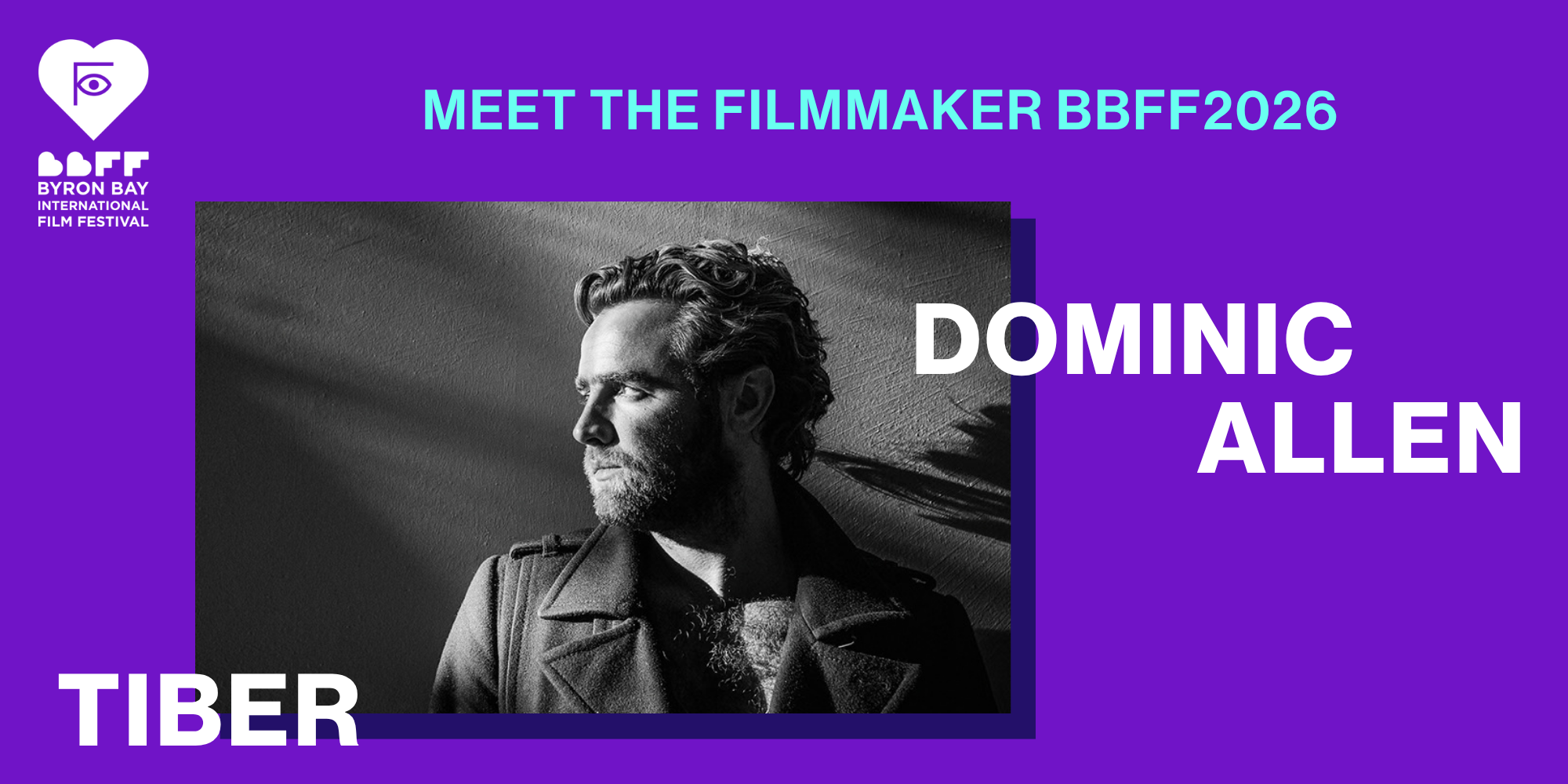
BBFF2026 Meet the Filmmaker: Dominic Allen
Tiber
“The past isn't a place we've left; it travels with us, the way a river carries everything upstream of it.” - Dominic Allen
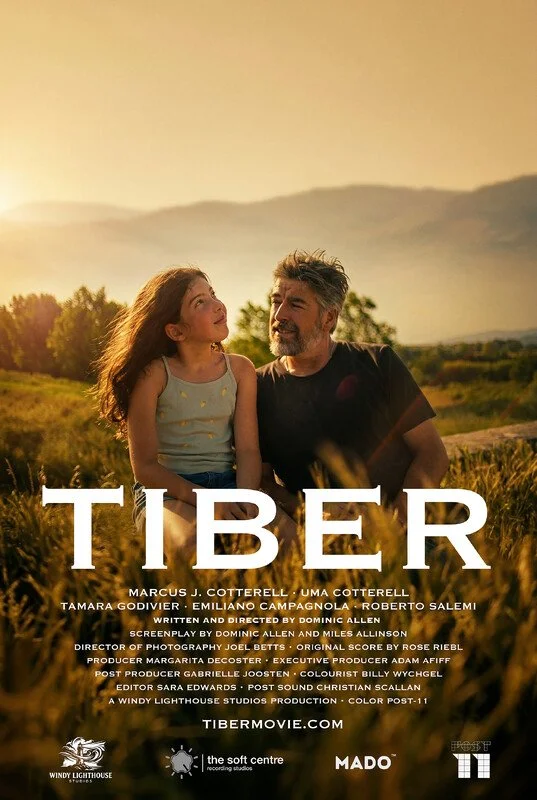
Following Australian-Italian art historian Marco and his young daughter Lucia on a summer journey through Italy, TIBER moves between Rome, Tuscany and the Tiber River in a quiet story of memory, loss and connection. With its evocative landscapes, intimate father-daughter relationship and distinctly European sensibility, the film invites audiences to consider how the places we inhabit and the memories we carry can shape the way we move through the present.
For Dominic Allen, TIBER began in Rome. Not as a story, but as a feeling.
After years of living and studying in the city, Dominic became fascinated by the way its history seemed to exist alongside the present. The ruins, churches, sculptures and streets carried stories that had outlived generations, but somehow never felt finished.
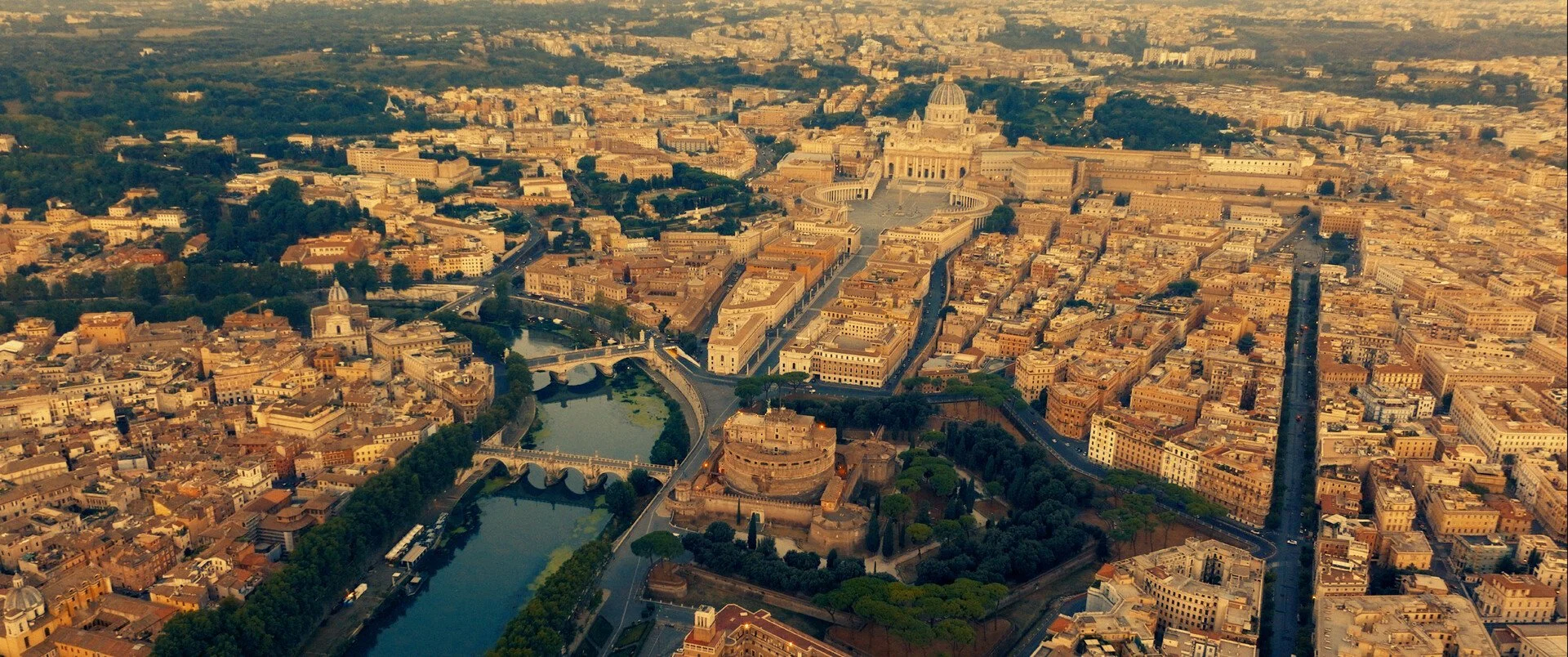
“I became convinced that cities are not silent, that the past is not behind us but standing in the room,” Dominic says.
It was an idea that stayed with him.
So did Bernini’s Ecstasy of Saint Teresa, which Dominic repeatedly returned to during his time in Rome. A woman frozen in marble, caught somewhere between bliss and horror, became a kind of creative touchstone for the film he would eventually make.
“I couldn't shake the idea that stone could hold feeling like that, and that if stone could, so could memory.”
For Dominic, that became the starting point for TIBER. A film interested in what we carry with us, and how the past can remain present even when we think we have moved on.
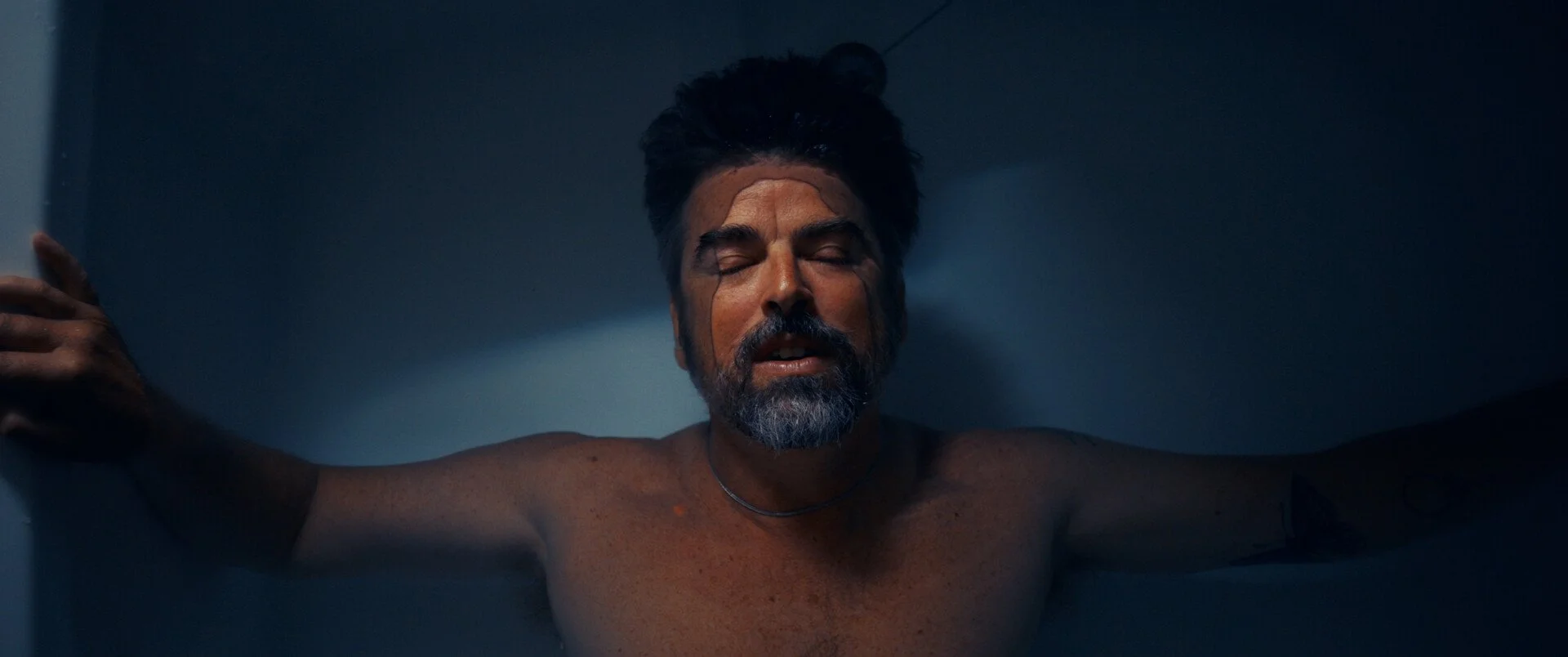
The shape of the story arrived much later, and much more simply: a father, a daughter, a small gold car and a river.
Co-written with Miles Allinson, TIBER follows Marco, an Australian-Italian art historian, on a summer journey through Italy with his young daughter Lucia. But Dominic was less interested in constructing a conventional story about grief than in finding a cinematic language for something more difficult to explain.
“I wanted to make a film in which a private grief moves through that world, held not only by memory but by art, landscape and time, and where sorrow can sit beside tenderness, play and even lightness without cancelling it out.”
That balance is central to Dominic's approach. He isn't interested in telling audiences what to feel, or in making grief fit neatly into a beginning, middle and end. Instead, he describes TIBER as moving at “the speed of memory rather than plot”.
There are long takes, natural light, real locations and plenty of silence. Shot in Italian with an Italian cast across Rome, Florence and the Tuscan hills, the film deliberately leans towards the visual language of European cinema.
For Dominic, that was an important considered choice.
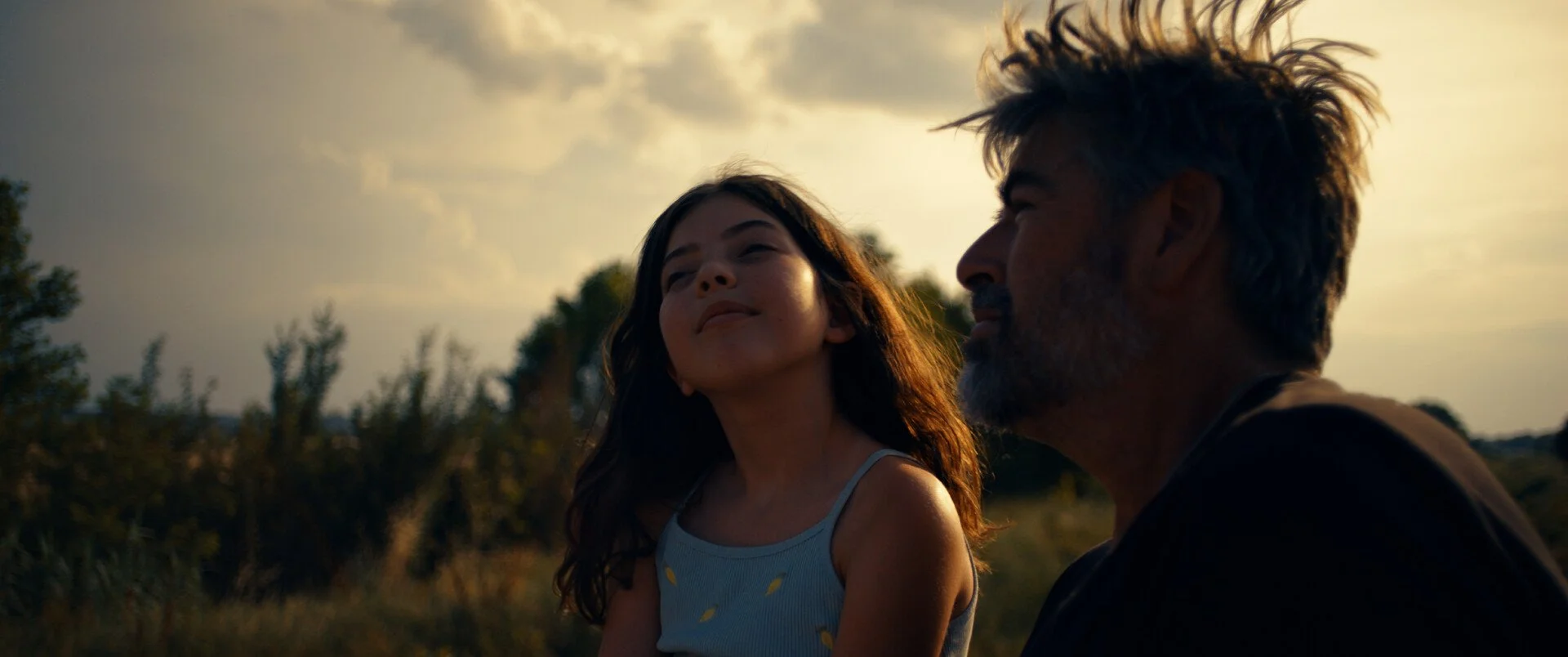
His background in documentary and immersive work has shaped the way he approaches the camera. He is drawn to what is already there rather than trying to manufacture a moment; allowing a location, a face or a silence to carry its own weight.
“The camera observes rather than pushes,” he says.
It is an approach that gives TIBER room to breathe. The film asks its audience to pay attention to the details without immediately demanding that they understand what those details mean.
“I don't want to tell audiences what to feel; the film is built to be experienced rather than explained.”
That extends to the way Dominic thinks about memory itself. He hopes the film might change the way audiences think about the memories they carry, not as something neatly contained in the past, but as something that continues to move alongside us.
“The past isn't a place we've left; it travels with us, the way a river carries everything upstream of it.”
For Dominic, grief and beauty are not opposites. They can exist in the same moment: a summer road, a child's laugh, a marble saint, a terrible loss.
The film was years in the making but making it was a remarkably small-scale undertaking for a feature set across Italy.
Dominic, producer Margarita, lead actor Marcus and director of photography Joel formed the core of a four-person shoot crew, with everyone taking on whatever needed to be done. The production demanded patience as much as resources, particularly when it came to securing access to the Vatican church needed for the opening scene.
“We were patient and wrote lots of letters.”
And then of course there was the heat of the Italian summer.
One of Dominic's favourite memories from the production came much later, when the crew finally reached the Tiber itself.
The film had been shot chronologically, meaning the river had remained a destination throughout the production. After carrying that idea through the entire process, arriving there to shoot the final scene felt unexpectedly liberating. For someone who began the film thinking about Rome's ability to hold the past in the present, it feels like an appropriate place to have ended up.
But TIBER is also deeply connected to another place: the Northern Rivers.
Dominic lives in the region and runs ReddogsVR and Windy Lighthouse Studios from there. Over the past decade, his work has ranged from documentary and immersive projects to commercials, music and feature filmmaking.
Although TIBER is Italian-language and was shot entirely in Italy, much of its creative life happened back home. It was written, edited, scored and finished in the Northern Rivers, with many of its collaborators coming from the local film community.
“Behind the beach there's a serious, capable film community, people who work at the highest level and choose to do it from here.”
For Dominic, TIBER is therefore a Northern Rivers film in its own way. Just one that happens to have been made on the other side of the world.
That makes bringing it to the Byron Bay International Film Festival's 20th edition particularly meaningful.
Dominic has watched BBFF grow into a festival that takes independent cinema seriously without losing its sense of community. After years of carrying TIBER from an idea in Rome to a finished film made with collaborators from home, he now gets to sit in a cinema in Byron and watch it with the people who helped make it possible.
“Festivals in Venice or Adelaide matter for a film's life. This one matters for ours.”
And perhaps that is what Dominic is most looking forward to.
Not explaining the film. Not telling audiences what they should take from it. Just sitting in the dark, with a Byron audience around him, and seeing what happens.
The NSW Premiere of TIBER is at Palace Byron Bay on Tuesday 20th October with Cast and Crew present for a Q&A.